For more than a century, Australia’s thoroughbred sales revolved around polished auction rings, bustling sale grounds, and agents hunting for future champions.
But over the past decade, online trading has reshaped how thoroughbreds are bought and sold, transforming both the economic and cultural landscape of the industry. Leading that shift is Bloodstockauction.com, widely regarded as the pioneer of Australia’s online thoroughbred marketplace. What began as a bold start-up has become standard practice, raising broader questions about convenience, efficiency, welfare, and the future of traditional auction houses.

When Bloodstock Auction entered the market in December 2014, the idea of a fully online sale was met with curiosity and caution. Their debut catalogue listed just 27 thoroughbreds, with 22 sold. By comparison, Australia and New Zealand’s established auction houses dwarfed the newcomer: 4,155 horses were listed with Inglis that year, 5,708 with Magic Millions, and 2,654 with New Zealand Bloodstock. Yet Bloodstock Auction’s modest launch delivered an 80% clearance rate, signalling not just proof of concept, but a preview of how the industry might eventually operate.
Today, that preview has become reality. Bloodstock Auction has since held more than 472 online auctions and listed 40,743 thoroughbreds in Australia alone, alongside 41 auctions in New Zealand and 11 in the United States. The platform has not only grown in scale but helped redefine the commercial landscape of racehorse trading. The key question now is not whether online auctions work, but whether traditional models still hold relevance.
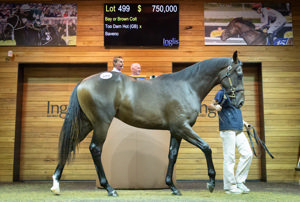
For several years, Bloodstock Auction operated in a space of its own. That changed three years later, when Inglis launched its online sales platform in May 2017. Most recently, Magic Millions, long synonymous with large-scale physical auctions, entered the digital arena. Once a disruptor, online selling is now a fixture of the modern market. As digital platforms have expanded, several long-running in-person auctions have quietly disappeared, including a number of yearling and broodmare sales. The shift reflects a market that increasingly values convenience, efficiency, and global reach, the very qualities traditional sale grounds struggle to match.
The appeal lies not only in accessibility, but timing. Online auctions offer unparalleled flexibility, with Bloodstock Auction’s weekly sales allowing owners to list horses at the moment they peak, sometimes within days of a strong race performance. Traditional sales, scheduled months in advance, cannot match this immediacy. Horses can be sold while their form is hot, maximising returns for sellers and enabling buyers to bid with current information.
The advantages extend well beyond convenience. Online selling also supports improved animal welfare outcomes. Traditional auctions require transporting horses to sale grounds, exposing them to loud, unfamiliar, and often stressful environments. Research by Dr Barbara Padalino highlights that long-haul travel poses genuine risks to horse health, particularly for broodmares with foals at foot, whose stress levels can escalate dramatically during unnecessary transport. Online selling allows horses to remain in familiar environments, reducing stress, fatigue, and the potential for injury.
The rise of digital platforms has not eliminated traditional auction houses, but it has altered expectations. Sellers increasingly prioritise speed and flexibility, buyers expect real-time visibility of form, and both parties want reduced cost and risk. From a welfare standpoint, the online model also offers a tangible improvement in the treatment and handling of horses.
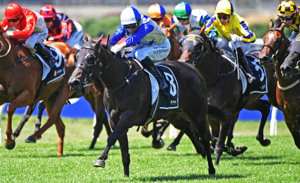
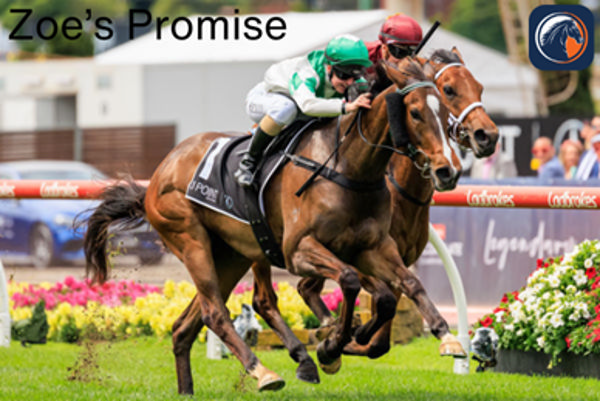
While major competitors have now followed suit, Bloodstock Auction remains the trusted pioneer of Australia’s digital sales movement. Its weekly auctions empower owners to list horses at their peak, achieve optimal returns, and prioritise welfare without leaving the stable. This has resulted in many unique opportunities and outstanding results. For example, Zoe’s Promise was purchased as a yearling from Bloodstock Auction for just $880 AUD and went on to win the Group II, 3 Point Motors Fillies Classic (1600m) at Moonee Valley, ultimately earning $603,900 in her career. Stories like hers highlight the hidden gems and remarkable opportunities that online thoroughbred sales can uncover.
In a sport where timing, transparency, and welfare are paramount, Bloodstock Auction has set the benchmark for the modern sales model. With the industry increasingly embracing digital solutions, one thing is increasingly clear: the era of the online auction has arrived and it’s here to stay.