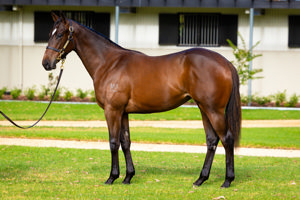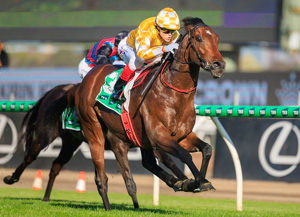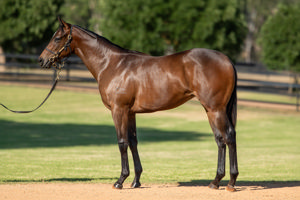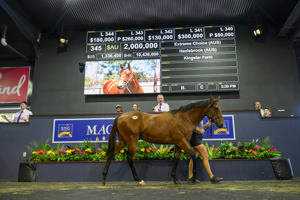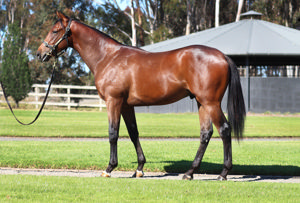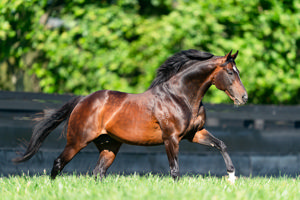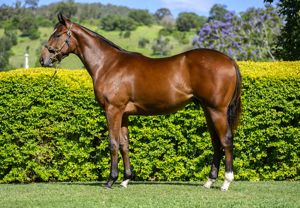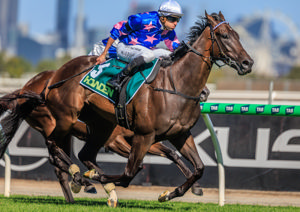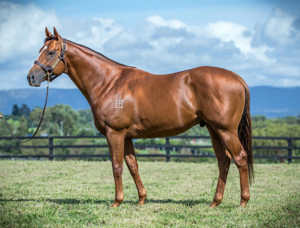
The foals in question, from the first crop of Group I winning sprinter Shellscrape, were the subject of much talk within the industry when they were born in 2012.
 Ian McPherson of Wattle Grove Thoroughbreds, which stood Shellscrape at stud,
never expected to find himself in a situation where equine history was being
made.
Ian McPherson of Wattle Grove Thoroughbreds, which stood Shellscrape at stud,
never expected to find himself in a situation where equine history was being
made."Of that first crop of 37 foals, 12 of them were affected," he recalled.
"The dock of a normal horse's tail is made of between 10 and 12 vertebrae, but of the foals affected six had no tail at all so were essentially like a manx cat, but in a horse and the other six had much shorter tails of between three and four vertebrae.
"We spoke to veterinary experts in this field from all over the world and it's the first occurrence of something like this in equine history, not just thoroughbreds, but equine history!
"They put it down to what they called a rogue gene, something incredibly rare and never seen before."
The rogue gene was responsible for the mutation which in some ways must be an example of evolution at work.
If you subscribe to the theory of evolution, then mutations in animals have occurred throughout history and have resulted in the creation of various breeds and species.
If a horse born in the wild without a tail was advantaged in some way over its peers, then it and its offspring would flourish and eventually they would override the horses with tails to the extent that horse with no tails would be dominant.
The affected foals, now yearlings, are still alive according to Mr McPherson and some are being broken in and will probably race at some point in the future.
And what of Shellscrape, who was initially put back in training when his stud career faltered?
"He's living the 'Life of Riley' in a paddock down at Albury with some mares to keep him company," McPherson said.
"If he gets a few foals that turn out well, the bloke that has him will be happy."